

Yom Kippur used to feel like one of the hardest biblical feast days to explain to my children. Sukkot is easy for children to picture. We build a sukkah, eat outside, and talk about YHVH dwelling with His people. Passover has lambs, unleavened bread, and bitter herbs. Yom Teruah has trumpets. But Yom Kippur deals with concepts that can feel much more abstract: atonement, cleansing, holiness, the High Priest, blood, the Most Holy Place, and the question of how sinful human beings can dwell in the presence of a holy God.
Over the years, our understanding of this day has changed in some important ways. For a long time, I associated Yom Kippur with ideas that are common in later Jewish tradition: a special season of repentance during Elul, the so-called Ten Days of Awe, and the picture of God weighing our good deeds against our bad deeds. But when we returned to the Torah itself and looked carefully at Leviticus 16 and the surrounding passages, we realized that those ideas are not the focus of the biblical Day of Atonement. Yom Kippur is not about accumulating enough good deeds to outweigh our bad ones. It is not about earning our way back into favor with YHVH. In fact, the entire point of atonement is that we cannot make ourselves clean enough to enter His presence. YHVH Himself provides the means of cleansing.
The Day of Atonement Is About a Holy God Dwelling With Man
The key to understanding Yom Kippur is the Tabernacle. Before we ever arrive at Leviticus 16, YHVH has already brought Israel out of Egypt, entered into covenant with them, and commanded them to build Him a sanctuary. That command is astonishing when you stop to think about it. The Creator of heaven and earth desired to dwell in the midst of His people.
“And let them make Me a sanctuary, that I may dwell among them.” — Exodus 25:8
But there was a problem. YHVH is perfectly holy, while human beings are affected by sin, uncleanness, corruption, and death. The presence of a holy God in the midst of an unclean people raises an enormous question: How can He continue to dwell among them without His holiness consuming them?
Leviticus 16 answers that question. Yom Kippur is the appointed day of cleansing and atonement. The priesthood is cleansed. The sanctuary is cleansed. The altar is cleansed. The people are cleansed. The purpose is not to create a spiritual balance sheet on which enough good deeds cancel out the bad ones. The purpose is to deal with uncleanness so that YHVH can continue dwelling in the midst of His people.
This is why Yom Kippur ultimately points so powerfully to Yeshua. We do not cleanse ourselves and then present ourselves to God as acceptable. We need a High Priest. We need atonement. We need YHVH Himself to provide the means by which we can be reconciled to Him.
What Does It Mean to “Afflict” or Humble Our Souls?
YHVH commands His people to do no work on Yom Kippur and to afflict or humble their souls. Over the centuries, fasting became so closely associated with this day that many people speak as though the Torah explicitly commands every person to abstain completely from food. However, that is not actually what the Torah says. The command is to humble or afflict the soul.
There are certainly places elsewhere in Scripture where people humble themselves through fasting. Fasting can be a meaningful and biblical way to seek YHVH, pray, or humble oneself. We have no problem at all with someone choosing to fast on Yom Kippur. What we have come to question is the idea that fasting itself is the command.
This distinction matters because YHVH’s commands are righteous, just, and good. The consequence given for refusing to humble oneself on this day is extremely serious: that soul is to be cut off from the people. If humbling oneself simply meant that absolutely no food could be eaten for a full day, difficult questions immediately arise. What about a nursing baby? What about a pregnant or nursing mother who needs nourishment? What about an elderly man in the hospital or someone who must eat with medication? Are these people incapable of obeying YHVH because of the limitations of their bodies?
That does not fit the character of the God revealed in Scripture. YHVH does not create impossible commands and then condemn the weak for failing to perform them. We believe the command is exactly what the Torah says: His people are to humble themselves before Him.
One very practical way this happens is through rest. Yom Kippur is a Sabbath. We stop working. That may sound easy until the day falls in the middle of harvest season, or when Sukkot is only a few days away and there are groceries to buy, camping supplies to pack, food to prepare, laundry to finish, and a hundred little things we feel must be done. Then YHVH says, in effect, “Stop.”
That is humbling. We acknowledge that the world will continue without our labor. Our provision comes from Him. Our salvation comes from Him. We are not indispensable. We can rest because He is God and we are not.
If someone wishes to fast as part of that humbling, that is certainly permissible. But we do not believe anyone should carry guilt because he or she cannot fast. Extra practices can be meaningful and beautiful, but we should be careful not to turn an extra practice into a command from YHVH. Scripture warns us not only against subtracting from His commands, but also against adding to them.
Using the Tabernacle to Teach Children About Yom Kippur
One of the most helpful things we ever did with our children was build a simple model of the Tabernacle. It did not need to be elaborate or historically perfect. Construction paper, cardboard, poster board, scraps of fabric, and simple handmade pieces were enough. The purpose was not to create museum-quality architecture. The purpose was to give the children something they could see and touch while we read Leviticus 16 aloud.
We included the brazen altar, the laver, the table of showbread, the altar of incense, the golden lampstand, and the Ark of the Covenant with the mercy seat. We also needed a figure representing Aaron, another man who could lead the goat into the wilderness, two goats, a ram, and a bull. As we read through the chapter, we could physically move the pieces and act out what was happening.
Suddenly Leviticus 16 was no longer merely a difficult chapter filled with unfamiliar ceremonies. The children could see where the High Priest went. They could see the altar, the Holy Place, the veil, and the Most Holy Place. They could understand that there were boundaries around YHVH’s presence. Not everyone could enter. The High Priest entered only at the appointed time and not without blood.
Children understand boundaries very well. They understand that there are doors they are not allowed to open and places they cannot simply enter whenever they wish. That gives us an excellent opportunity to explain holiness. YHVH is not common. His presence is not something sinful human beings approach casually. Sin and uncleanness are serious because He is holy.
The Two Goats Make Atonement Visible
The two goats of Leviticus 16 give children another powerful visual picture. One goat was killed, while over the other the sins of Israel were confessed before it was led away into the wilderness. When a child physically moves that little goat farther and farther away from the camp, an abstract theological idea becomes visible.
The sin is being carried away. The uncleanness is being removed. The camp is being cleansed so that a holy God can continue to dwell in the midst of His people.
This is also where we can begin showing our children that the sacrifices of the Torah were never the final answer. Hebrews 9 and 10 take the imagery of the Day of Atonement and show us its fulfillment in Messiah. The blood of bulls and goats could never be the ultimate solution to human sin. Those sacrifices pointed forward to something greater.
Yeshua Is Our High Priest and Our Atonement
Yeshua entered the greater and more perfect Tabernacle, not repeatedly and not with the blood of animals, but with His own blood. He accomplished once for all what the earthly Day of Atonement could only picture.
“But Messiah came as High Priest of the good things to come, with the greater and more perfect tabernacle not made with hands, that is, not of this creation. Not with the blood of goats and calves, but with His own blood He entered the Most Holy Place once for all, having obtained eternal redemption.” — Hebrews 9:11-12
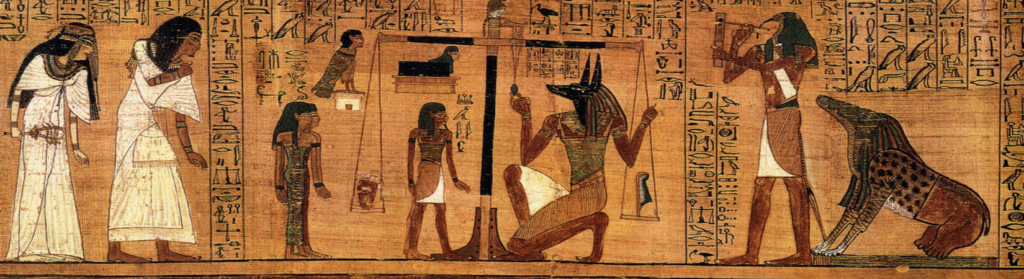
This changes the entire emphasis of Yom Kippur. The central question is not, “Have I been good enough?” It is not, “Do my good deeds outweigh my bad deeds?” It is not even, “Have I repented intensely enough during the last ten days?”
The question is, “What has my High Priest done?”
We cannot cleanse ourselves. We cannot erase our own sin. We cannot accumulate enough righteousness to cancel our guilt. We need the cleansing that YHVH provides through Messiah. Our confidence is not in the strength of our repentance or in the amount of suffering we can impose upon ourselves. Our confidence is in Yeshua.
Teaching the Vocabulary of Atonement
Yom Kippur is also a wonderful opportunity to teach children some of the most important words in Scripture: reconciliation, atonement, mercy, grace, restitution, forgiveness, and cleansing. These are not simply religious vocabulary terms to memorize for a quiz. They describe what has gone wrong between mankind and our Creator and what YHVH has done to restore us to Himself.
One passage we have memorized is Romans 5:10-11:
“For if, when we were enemies, we were reconciled to God by the death of his Son, much more, being reconciled, we shall be saved by his life. And not only so, but we also joy in God through our Master Yeshua the Messiah, by whom we have now received the atonement.” — Romans 5:10-11
Those words mean much more after a child has watched Leviticus 16 acted out. We were enemies. We were reconciled. We received atonement. Notice what the passage does not say. It does not say we finally accumulated enough good deeds to make ourselves acceptable. It says we were reconciled through the death of the Son.
Let Children Find Atonement in Their Own Bibles
Another simple activity we have used is a Bible drill. I call out references and let the children race to find them:
Bible Drill –
- Exodus 29:36
- Exodus 30:10
- Leviticus 1:4
- Leviticus 16:34
- Numbers 8:21
- 2 Samuel 21:3
- 1 Chronicles 6:49
- Nehemiah 10:33
The purpose is not simply to keep children busy. I want them to see for themselves that atonement is a theme running through Scripture.
I want little fingers turning pages. I want them locating the verses themselves. I want words like atonement, cleansing, mercy, and reconciliation to become familiar territory in their Bibles.
Eventually, I also want them to be able to explain what those words mean to someone else. A simple question can be very powerful: “If someone asked you what Yeshua has done for you, what would you say?” Help your children think through a few simple sentences. Let them practice explaining the good news in their own words.
Atonement is not merely something to define. It is something YHVH has provided. It is something we have received through Messiah. And it is something worth telling others about.
Yom Kippur Is Not a Special Season for Earning Forgiveness
Our understanding of repentance around Yom Kippur has also changed. We no longer view Elul and the so-called Ten Days of Awe as a special biblical repentance season, because the Torah does not establish such a season. Repentance is important, of course. If YHVH convicts us of sin, we should repent immediately. We should not wait for a particular month or feast day to make things right.
Yom Kippur certainly gives us an appropriate opportunity to consider the seriousness of sin and to humble ourselves before YHVH. If He brings sin to mind, we should confess it. But we do not see the day as a spiritual deadline in which God is weighing our deeds or deciding whether we have finally repented enough.
That understanding easily turns atonement into a form of works-based salvation. It shifts our eyes from what YHVH has provided to what we have performed.
The message of Leviticus 16 is very different. YHVH is holy. Human beings are unclean. We cannot cleanse ourselves. Yet YHVH desires to dwell among His people, so He provides atonement. That picture reaches its fullness in Yeshua, our High Priest.
Taking Time to Be Quiet Before YHVH
At some point during Yom Kippur, I like to have some quiet time alone with my Bible and YHVH. I can examine my heart, confess any sin He brings to my attention, pray for my family and others, and meditate on what Messiah has done for me. But my goal is not to work myself into a sufficient level of sorrow so that I can earn forgiveness.
The focus is His provision.
YHVH is holy. I am not. I need cleansing that I cannot provide for myself. Yet He has made a way for me to draw near through Messiah. That truth produces humility without hopelessness. It produces gratitude without self-righteousness.
Our children need to see that too. They need to know that Torah is not a system in which we spend our lives anxiously trying to earn YHVH’s approval. His commands teach us how to walk with Him, but when we sin, our hope is not that enough good behavior tomorrow will erase what we did yesterday. Our hope is our High Priest.
Ending the Day With Songs of Redemption
We found that a wonderful way to close the Day of Atonement is to gather around the piano in the evening and sing every song we could think of that had to do with the atonement. “Power in the Blood,” “Lord, Have Mercy,” “Since I Have Been Redeemed,” and even “Amazing Grace.”
There is something beautiful about the movement of the day. We begin by remembering the holiness of YHVH, the uncleanness of man, the veil, the High Priest, blood, cleansing, and atonement. Then we finish by singing about the One to whom all of those things were pointing.
The goal of Yom Kippur is not to spend the entire day wondering whether we have been good enough. We have not been good enough. That is precisely why we need atonement. The answer is not to work harder until the scale tips in our favor. The answer is Messiah.
From Atonement to Dwelling
Then Yom Kippur ends, and almost immediately our thoughts turn toward Sukkot. Suddenly there is a sukkah to plan, camping supplies to pack, food to prepare, and a week of rejoicing ahead.
I love the sequence.
First comes cleansing. Then comes dwelling.
First comes atonement. Then comes fellowship.
YHVH makes a way for His people to be clean so that He can dwell among them.
That is one of the most beautiful themes running from the Tabernacle all the way through Scripture: a holy God making a way to dwell with mankind.
Why This Matters So Much to Me Personally
I spent the first thirty years of my life carrying an enormous amount of guilt. I worked hard to please people and tried to keep many man-made religious expectations. Somehow there was always one more rule, one more expectation, one more thing I had failed to do correctly, and one more reason to wonder whether God was pleased with me.
When I began learning Torah, one of the things that surprised me was how straightforward YHVH’s commands often are. He says what He wants. His commands are good. The burden becomes unbearable when human beings begin piling our own requirements on top of His.
This is one reason the question of fasting matters to me. Fasting is not bad. If you want to fast on Yom Kippur, fast. You may find it deeply meaningful. But we should not tell a nursing mother that YHVH commanded her to stop eating when Torah never actually says that. We should not burden the elderly, the sick, or anyone else with guilt over a requirement that we cannot clearly show from the command itself.
Extra practices may be beautiful. They may be meaningful. They may even be wise for a particular person. But they are still extra. We should never confuse our traditions with YHVH’s commandments.
What if we simply trusted Him enough to do what He actually said?
Rest. Humble ourselves. Remember the atonement He has provided. Teach these things to our children. Turn our attention away from our own works and toward our High Priest.
For our family, Yom Kippur has become a quiet and beautiful day. It is a day when the work stops, even though Sukkot is coming and there are a thousand things we could be doing. It is a day to open Leviticus 16 again and remember the Tabernacle. It is a day to teach our children why cleansing was necessary before a holy God could dwell among His people. Most of all, it is a day to look toward Yeshua.
We could not make ourselves clean.
So He made a way.
Resources for Teaching Children About the Tabernacle and Yom Kippur
If you would like to build a simple Tabernacle with your children, you can see a diagram of the layout of the furniture here:
https://homeschoolingtorah.com/links/tabernacle-layout-bible-news/
You do not need elaborate supplies. Scraps of poster board or cardboard work well, and you may already have pieces of fabric that can be used for the tents, curtains, and coverings. The goal is not to make a perfect model, but to give your children something tangible to look at and move around while you read through Leviticus 16 together.
If you’re feeling overwhelmed by this project, consider purchasing a paper Tabernacle model before Yom Kippur. One option is available here:
https://homeschoolingtorah.com/links/paper-model-of-tabernacle-christian-books/
You can also read how one mom studied the Tabernacle with her children here:
https://homeschoolingtorah.com/links/building-tabernacle-sprittibee/
Thanks for the great ideas! I tried clicking the link for the paper tabernacle and got an Oreo moon phases activity (which don’t get me wrong.. is totally great as well, but maybe not the correct link). Yom Kippur is the one that I find hardest to make relatable for my little. Thanks again for this!!
LOL! Oh boy, the Oreo moon phase activity is definitely NOT correct! My mom has the tabernacle project that we were linking to, and I will give her a call and get that information for you. The company has related books, too, and they are wonderful at explaining everything with nice pictures. However, I don’t have it in the house any more because we moved after I wrote this article. I’ll get back with you……
https://www.amazon.com/gp/product/1596362766/
This is a very nice tabernacle book.
Printable tabernacle model:
http://www.gospelhall.org/index.php?option=com_content&view=article&id=2073