
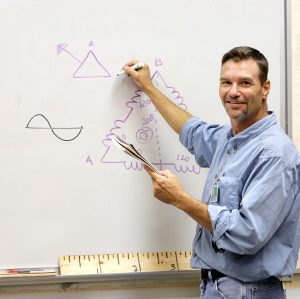
How can we motivate our children to learn?
I absolutely love homeschooling and have no desire to educate my children in any other way, but admittedly, one of the biggest drawbacks to homeschooling is the lack of competition and the give-and-take that can happen in a good classroom. I’ve personally found this is difficult to replicate at home.
So how can I motivate my children to become lifelong, self-motivated learners?
- Make learning easier through practice.
The basics are really important! My children just don’t want to write an essay when they haven’t mastered cursive handwriting. They’d rather avoid algebraic equations and chemistry when they never mastered their times tables. They’d prefer not to use a dictionary if they still struggle with alphabetic order. They’ll stick with television until their reading is as easy as breathing. The same goes for typing… spelling… the books of the Bible…
So let’s get back to the basics in our homeschools, giving our children plenty of practice to not just know about something but to do it easily and painlessly.
- Tell them why.
My two-year-old doesn’t always need to know why I want her to obey. But my older children need to know why — badly!
Learning why helps my children internalize what they are learning, wrestle with it, and then — the best part — make it their own.
Even God usually tells us why. (For instance, check out Philippians 2:14-16 for why God tells us not to grumble.)
So when your children ask the age-old question, “Why do I have to learn this?” be sure to thoughtfully stop what you’re doing to give them answers. Start a discussion with them. Take them on a field trip. Visit an elderly person who can tell stories about why.
- Give them an audience.
When I was in 3rd grade, my teacher filled our math class with games and friendly competition at the chalkboard. However, I find it difficult to play many games with my little, alone 3rd grader.
Yet games, science fair projects, reports, and school newspapers all give our children an audience. Sorry, Mom, but sometimes you’re a boring audience for your budding little genius. How can you help your developing scientists learn to present their knowledge to an audience larger than your home can provide?
The hardest part about this step is that it requires me to schedule something different outside of my normal homeschooling days. That complicates everything for us mothers, doesn’t it? Yet we have so many opportunities, including webinars and YouTube here online. Allow some occasional interruptions to put the spark of an audience back into your school days.
- Let them see the world from God’s perspective.
Why are we teaching our children anyway? Isn’t it so that we can train ambassadors who will travel with God’s good news into a dying world? As Andrew Pudewa says, we’re raising “competent communicators” — but we have the greatest message of freedom and eternal life and peace to communicate!
I appreciate my parents having late night/early morning discussions with me during my teenage years. They lost some sleep but showed great love, answering my deep questions and equipping me to be able to discuss spiritual things with others later.
My father also took me with him on his pastoral calls, allowing me to hear discussions he had with others. On our way home, he’d ask my opinion and point me back to Scripture.
Bedtime and long car rides, sitting on a blanket at the park — these are all times to turn the discussion to eternity and to the eternal needs of lost people all around you. How can you reach them?
“How, then, can they call on the one they have not believed in? And how can they believe in the one of whom they have not heard? And how can they hear without someone preaching to them? And how can anyone preach unless they are sent? As it is written: “How beautiful are the feet of those who bring good news!” (Romans 10:14-15).
So in summary, it seems that God has the wisest advice on how to motivate your children to be lifelong learners. It’s all about interaction with real people, not just with books or computers.
“These commandments that I give you today are to be on your hearts. Impress them on your children. Talk about them when you sit at home and when you walk along the road, when you lie down and when you get up. Tie them as symbols on your hands and bind them on your foreheads. Write them on the doorframes of your houses and on your gates” (Deuteronomy 6:6-9).

P.S. Have I missed anything? Hey, experienced homeschool moms — what worked for you?

0 Comments